
Commanded to Kill
A Review of Curt Siodmak's "Donovan's Brain"
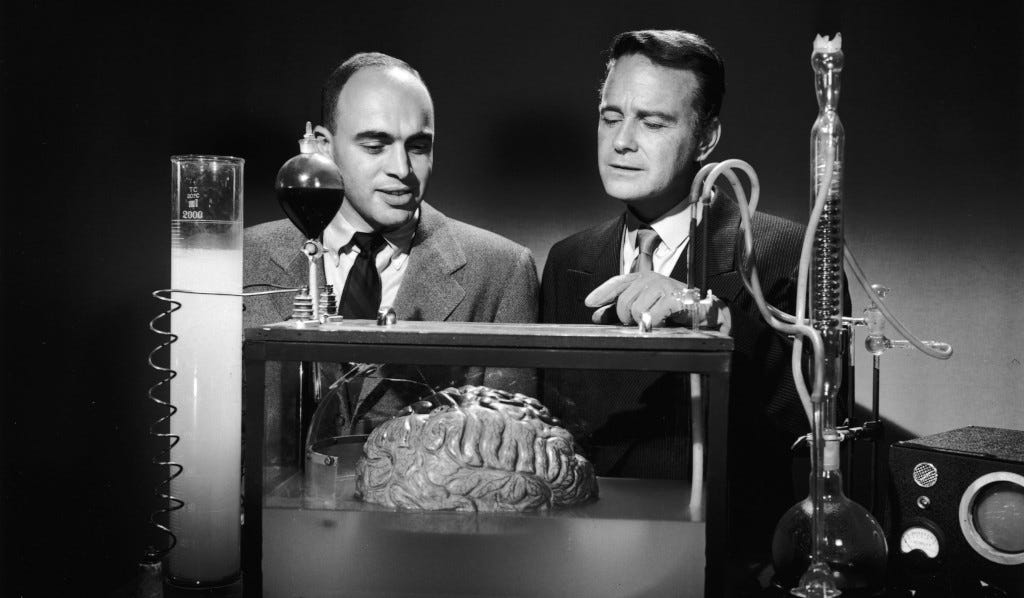
Welcome to the second installment of Classics from the Grave. Tonight, we have one of the best examples of sci-fi-horror: Donovan’s Brain.
Black Mask magazine was one of the first pulp magazines of the Golden Age, beginning life in April 1920. Its creators were George Jean Nathan and H.L. Mencken. Mencken was the last fellow one would expect to publish a magazine strictly for the booboisie (Mencken’s obnoxious term for the uncultured masses). Mencken had a low opinion of the American working and middle classes. He frankly had a low opinion of America generally. During the Great War, Mencken filled his Baltimore Sun columns with pro-German, anti-British screeds that somehow didn’t get him in trouble once Yankee guns entered the fray in April 1917.
Well, Mencken and Nathan decided to uplift the average American ignoramus by launching The Smart Set magazine. When this magazine proved unpopular and unprofitable, Mencken and Nathan turned to the pulps with the idea of launching a magazine aimed at a black American audience. Instead of that, they founded what would become Black Mask—the greatest mystery and crime fiction pulp magazine of all time. At its peak during the 1920s and 1930s, Black Mask found and fostered the talents of the originators of the hardboiled school of American detective fiction: Carroll John Daly, Dashiell Hammett, Raymond Chandler, Horace McCoy, and others. The pages of Black Mask not only bequeathed to the world the first Continental Op, Sam Spade, and Philip Marlowe tales, but it also produced the first noir stories, thus directly inspiring what would become film noir.
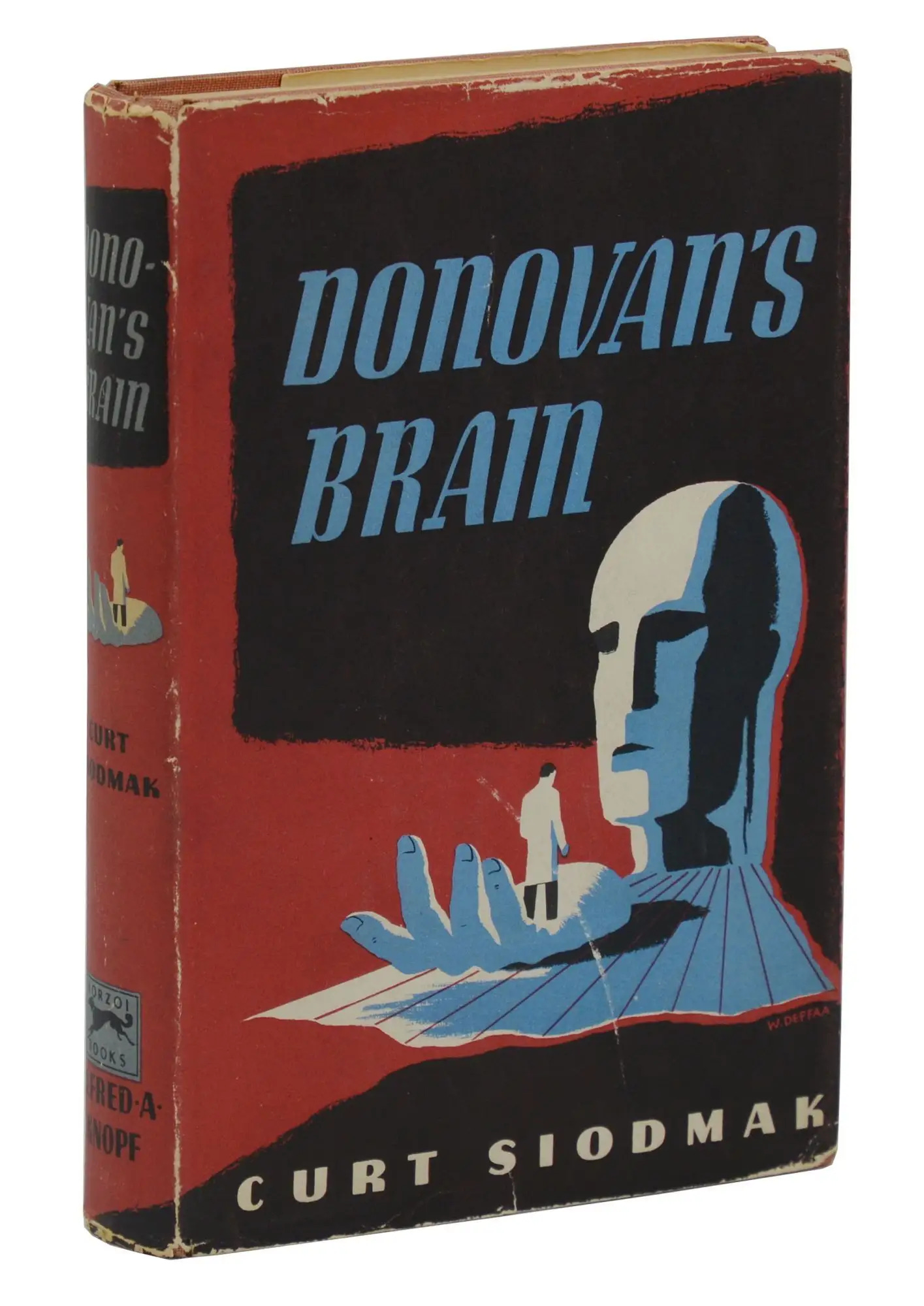
Despite specializing in tough-talking P.I.s and femme fatales, Black Mask also reprinted Edgar Allan Poe stories and other, more outré fare. One such oddity ran in the magazine from September to November 1942. Donovan’s Brain, which would become a complete first edition in 1943 before being picked up by the U.S. military and given to soldiers, sailors, and Marines as an Armed Services Edition paperback [1], is neither a noir lamentation nor a two-fisted shoot ‘em up. It is instead a strange science fiction story with heavy elements of horror. Donovan’s Brain tells the woeful tale of Dr. Patrick Cory, an eccentric scientist in rural Arizona who steals the brain of millionaire W.H. Donovan following his death in a plane crash. Soon enough, after bathing the brain in electrical currents, Dr. Cory finds himself under the control of Donovan’s brain. Since Donovan was an evil man in life, Dr. Cory becomes just as evil and obsessed with tying up loose ends from the millionaire’s life.
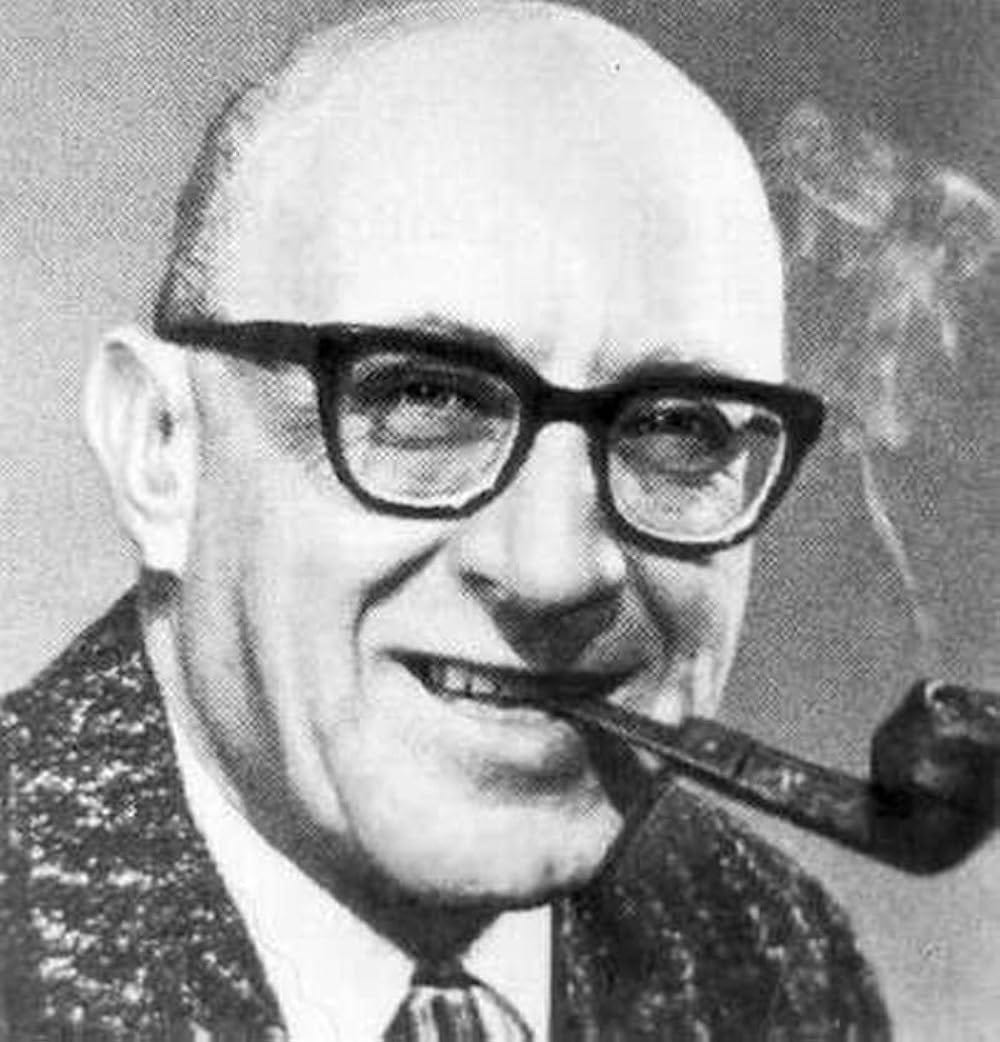
Curt Siodmak (1902-2000) was born Kurt Siodmak in Dresden, Germany. Reared in Leipzig, Siodmak began writing novels not long after graduating from university with a degree in mathematics. Sidomak’s first German-language works were easily turned into films thanks to his brother, the legendary film director Robert Siodmak [2]. The Siodmak partnership in Germany also included other names that would go on to be immortal in Hollywoodland: director Edgar G. Ulmer, screenwriter and director Billy Wilder, and producer Seymour Nebenzal. All of these figures would relocate to the United States in the 1930s following the establishment of Adolf Hitler’s government in 1933.
After a brief stopover in London working in the British film industry, Siodmak settled in California in 1937. There, he established himself as a highly successful screenwriter with a particular genius for speculative fiction. Some of Siodmak’s screenplays include: The Invisible Man Returns (1940), Frankenstein Meets the Wolf Man (1943), I Walked with a Zombie (1943), and Creature with the Atom Brain (1955). However, despite working in Hollywood well into the 1960s, Siodmak’s name is forever synonymous with the one film he wrote in 1941: The Wolf Man.
Even a man who is pure of heart,
And says his prayers by night
May become a wolf when the wolfsbane blooms
And the autumn moon is bright
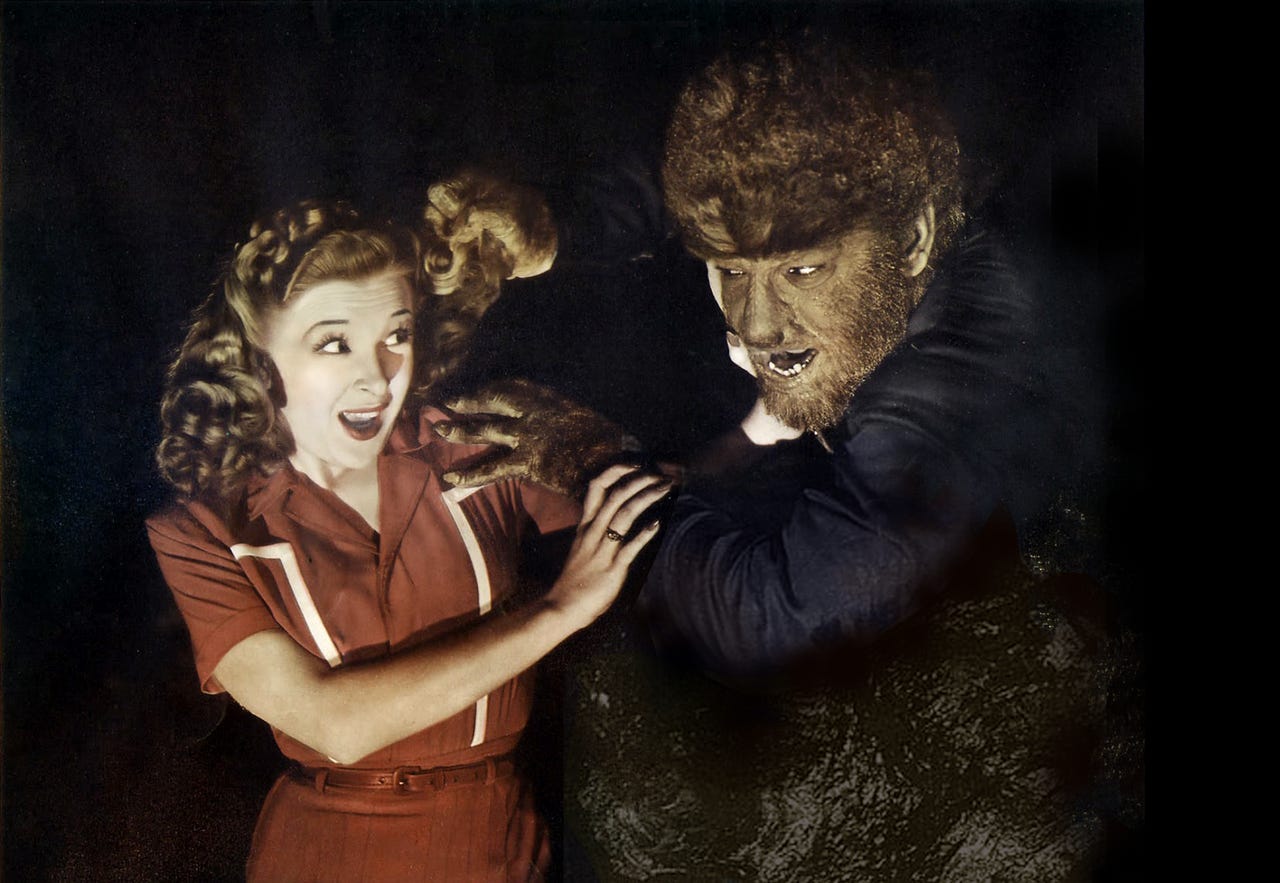
This piece of verse alone sealed Siodmak’s name in the history books, and Lon Chaney, Jr.’s portrayal of the werewolf Larry Talbot quickly entered the pantheon of Great American Monsters sometime in the mid-1940s. And speaking of movies, filmland adapted Siodmak’s Donovan’s Brain three different times: The Lady and the Monster (1944), Donovan’s Brain (1953), and The Brain (1962).
Siodmak continued writing screenplays and even took turns behind the camera as a director until retiring from Hollywood in the late 1960s. As a novelist, short story writer, and non-fiction scribe, Siodmak remained busy far into the 1990s. He published a sequel to Donovan’s Brain—Hauser’s Memory—in 1968. Siodmak died in his sleep at the ripe age of 98 in September 2000.
Donovan’s Brain tells its tale not with chapters, but with long diary entries that take place from September until May of the following year. Our narrator is Dr. Cory, who is a cranky loner dedicated solely to pushing the boundaries of science. In the first scene, Dr. Cory buys a Mexican organ-grinder’s monkey solely for vivisection. Dr. Cory’s lab in Washington Junction, Arizona, is full of such horrors, and the only person willing to criticize the good doctor’s activities is the useless alcoholic, Dr. Schratt. Much like in Frankenstein, Dr. Cory’s quest to keep dead tissue alive earns him disappointment and scorn from Dr. Schratt, who often speaks about the folly of entering into God’s exclusive domain.
On September 16, both Cory and Schratt are called to the scene of a horrific plane crash in the Arizona desert. They find the crew and passengers all dead, with the most illustrious of the deceased being Warren Horace Donovan, the mail-order millionaire. When Dr. Schratt proves too soused to help anybody, Dr. Cory takes control of the scene and its many bodies. This is how Dr. Cory manages to secretly saw open Donovan’s skull and remove his brain before sending the body away to Phoenix. Now, as the possessor of Donovan’s brain, Dr. Cory submerges it into a saline solution and electricity and attempts to keep the brain alive and firing for as long as possible.
Donovan’s brain becomes Dr. Cory’s obsession, to the point that he encourages his wife, Janice, to leave the house and pursue her own life in Los Angeles. Pretty soon, Dr. Cory’s personality and mannerisms begin to change. By November, it is clear that Donovan’s brain has warped and taken control of Dr. Cory. As Donovan’s avatar, Dr. Cory begins engaging in criminality. First, he withdraws a large sum of money from a secret bank account that Donovan once held under the name of “Roger Hinds.” Next, Dr. Cory gets involved in the case of Cyril Hinds, a vicious juvenile awaiting trial for the murder of his own mother [3]. Donovan implores Dr. Cory to hire a shady private eye to buy off jury members and guarantee either an acquittal or a hung jury.
Just as Donovan/Dr. Cory begins their conspiracy, a sickly, tuberclosis-infected photographer named Yocum approaches Dr. Cory with a blackmail offer: either five thousand dollars or be prepared for a police investigation. Yocum is not bluffing; the strange, little man managed to snap pictures of Donovan’s brainless corpse and Dr. Cory’s laboratory. Donovan/Dr. Cory pays Yocum off, then promptly burns down the man’s home. Such acts of vengeance become common as Donovan begins to overtake Dr. Cory’s personality. Eventually, near the novel’s climax, Dr. Cory no longer exists; there is only Donovan, and at one point, he comes very close to strangling Janice to death.
The reasons for Donovan’s madness are explained away in a long piece of story exposition by Donovan’s ill daughter, Chloe Barton. Chloe informs Dr. Cory that her father was a Bohemian immigrant who changed his surname from Dvorak to Donovan to make a fortune in the Western United States. While living and working in San Juan, California, Donovan made one friend: the stationmaster, Roger Hinds. Hinds fell in love with a girl that Donovan wanted for himself. To fix this problem, Donovan engineered a plot in which Hinds lent him $1,833.18 so Donovan could establish his first business. This money came from the train station’s ticket office, and Roger expected Donovan to return the same sum the next day. Donovan had no plans ever to do such a thing, and he intentionally withheld the money so that Roger would be accused of theft. Donovan returned the money only after Hinds was fired, and even then, he made the former station master sign a receipt stating that Donovan had found the “stolen” money to keep his friend out of prison. Incensed by his friend’s betrayal, Hinds attempted to shoot Donovan. When he missed, Hinds committed suicide. Donovan took the dead man’s girl as his wife, and with her had two children.
This sordid history explains why Donovan seeks freedom for Cyril Hinds, a member of Roger’s family. Chloe tells Dr. Cory that the megalomaniacal Donovan seeks to expunge his guilt and save his soul by rescuing a Hinds, even though Cyril is as guilty as sin.
Before Donovan’s plan can come to fruition, the last remnants of Dr. Cory’s personality fight back against the vampiric brain, and Janice puts him over the top by reminding her husband that she loves him, not the possessive Donovan. Ultimately, the brain’s control over Dr. Cory ends when Dr. Schratt, who has wanted to kill the brain for a long time, is accosted one night by an intruder who similarly desires for the brain to die. The intruder, Yocum, gets a few licks in on Donovan’s brain before Dr. Schratt dispatches him. Then, when Dr. Schratt notices the encephalogram attached to the brain going haywire, he rightly assumes that someone is being attacked [4], and therefore, he and the brain have a fatal duel. The brain kills Dr. Schratt, but the wounds caused by Yocum and Dr. Schratt prove too deep to surmount. Donovan’s brain expires with a whimper.
Donovan’s Brain is precisely the kind of book one thinks of when they hear the words, “sci-fi horror.” Siodmak’s best novel has plenty of both genres. On the one hand, Donovan’s Brain is a story about mad science and an experiment gone horribly wrong. On the other hand, the novel is something of a ghost story, with the spiteful Donovan playing the role of a dybbuk slowly eating away at Dr. Cory’s soul. Another facet of the book is its speed—Donovan’s Brain races along at a steady clip, and despite being over 230 pages long, it’s the kind of book you can consume in a single sitting. Siodmak’s prose is lean and never dips into scientific jargon. Stephen King, a noted fan of the novel, is right to characterize Donovan’s Brain as the quintessential example of a horror story steeped in science rather than the supernatural [5]. And yet, there is something supernatural about the idea that Donovan can control Dr. Cory simply because he was such an evil and determined man in life.
All things considered, Donovan’s Brain is one of the best books from an epoch when both horror and science fiction were on the downswing. This often-overlooked novel excels as a hybrid and as a descendant of Lovecraft’s brain-in-a-jar genre; Donovan’s Brain does the formula better than the competition, bar none.
4.8 out of 5.
[1] The Armed Services Edition of The Dunwich Horror and Other Weird Tales (1945) likely played a huge role in resurrecting the works of H.P. Lovecraft, who enjoyed renewed popularity and a modicum of academic interest after World War II.
[2] Film fans might know Robert Siodmak’s name thanks to films such as 1943’s Son of Dracula, 1944’s Phantom Lady, 1946’s The Killers, and 1946’s The Spiral Staircase.
[3] Hinds stole money from his long-suffering mother, and when the woman threatened to alert the police, the reckless youth drove a car over her body multiple times.
[4] At this precise moment, Dr. Cory, under the command of Donovan, attempts to murder Janice.
[5] Stephen King, Danse Macabre (New York: Berkley Books, 1983), 17-19. Also of note, Donovan’s Brain is referenced in King’s novel, It.