
Death Comes Drawing
Five Horror Mangakas You Need to Know (& Read)
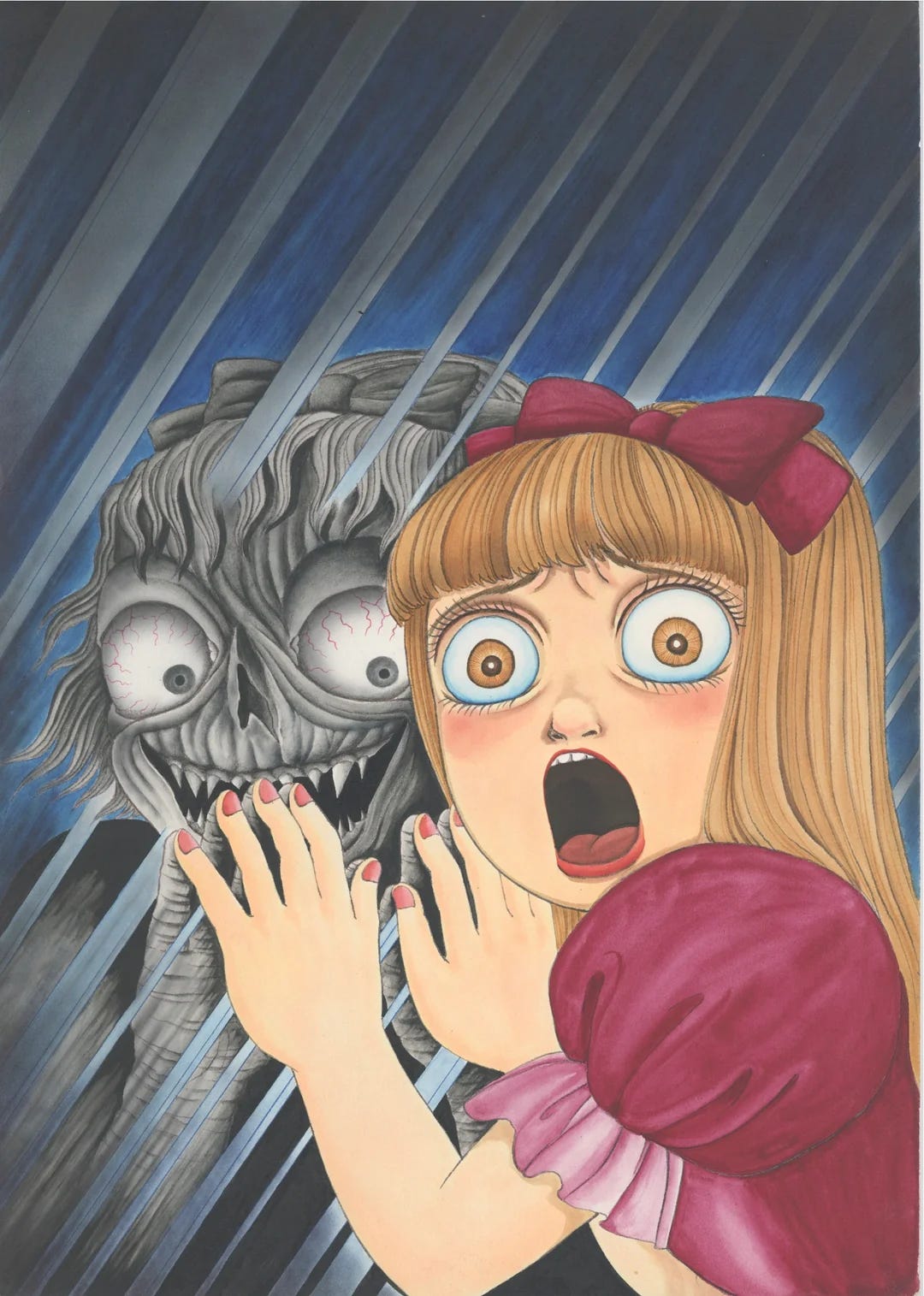
Fear is an international language. Everyone has had a nightmare or two. Everyone has felt something go bump in the night, and every culture across the globe has some variety of ghost, goblin, or ghoul in its folklore or mythology. Some countries are renowned for their horror, though. Italy is the home of the giallo. Gothic fiction was born amidst the misty moors of England and Ireland, and the gruesome conte cruel is one of the many fantastique products of France. Not to be outdone, the United States is synonymous with slasher films, cosmic horror, action-horror, horror-noir, and all manner of unique subgenres.
And then there is Japan. The Land of the Rising Sun is legendarily peculiar, and its horror fiction is no different. From ero guro to splatterpunk, Japanese artists and authors excel at sending shivers down spines. This is especially true in the world of manga, which, in case you don’t know, is the Japanese style of comic books. Mangas come in a wide variety. Shōnen manga are meant to appeal to adolescent boys, while Seinen stories are meant to appeal to slightly older men. Conversely, Josei manga are for adult women. Besides sex, manga can also be divided by genre. Horror is just one of the many manga genres, and it is the focus of today’s brief article.
Horror has been a staple of the Japanese comic book industry since it first began to bloom in the radioactive afterglow of World War II. However, it was not until the 1960s that the genre exploded in popularity. Inspired in large part by the popularity of Hammer Films in Japan, a handful of manga magazines began publishing dark and shuddersome short comics about Yōkai spirits and other elemental monsters drawn from Japanese folklore. Then, in the late ‘60s and early 1970s, some manga artists began branching out to include Western influences (including H.P. Lovecraft) in their horror stories. Indeed, the 1970s were the beginning of a horror manga wave that would reach its apex in the 1990s. Most of the mangaka profiled in this article got their start between 1980 and 2000, when Japan, the U.K., and the USA all enjoyed a tremendous boom in all things terrifying.
So, with this hyper-basic introduction out of the way, let’s talk about the five horror mangakas that you absolutely must read.
5. Go Nagai (1945 -)
The oldest author/artist on this list, Go Nagai, was born four days after the Empire of Japan officially surrendered to Allied forces aboard the U.S.S. Missouri. A native of Wajima, Ishikawa Prefecture, Nagai gained admission to the prestigious Waseda University but left early after falling seriously ill. Worried that he would soon die, Nagai decided to leave a lasting legacy so that the world would not forget his existence. The building of that legacy began in 1965 when he became an assistant to Shotaro Ishinomori, the creator of Kamen Rider. Two years later, Nagai penned and inked his first manga, Polikichi the Detective. Rather than horror, this was a work of comedy.
The most important year in Nagai’s career, 1969, saw him publish his breakout hit, The Alcatraz Family, another comedy manga. In that same year, Nagai founded Dynamic Productions alongside Ken Ishikawa. Now flush with cash and clout, Nagai set out to create his most important title: Devilman.
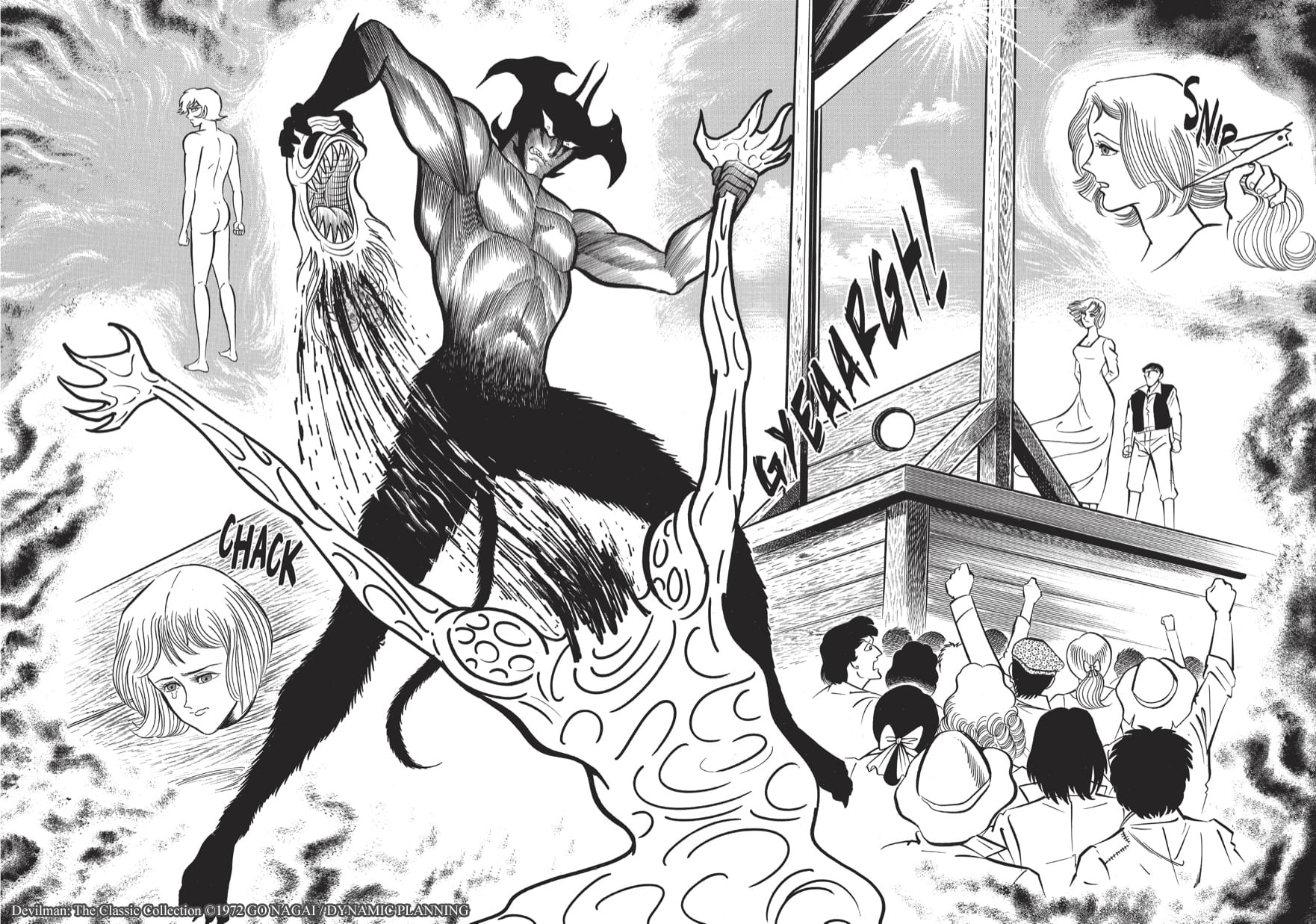
Devilman, first published in 1971 and later adapted into an anime series in 1972, tells the story of Akira Fudo, a teenager, who is informed by his friend, Ryo Asuka, the son of an archaeologist, that demons walk among humanity. Said demons have already infiltrated Earth, and Ryo tells his pal that the only way to defeat them is to have a powerful demon possess the body of a strapping, young lad. The Black Sabbath ritual is performed, and Akira Fudo is possessed by Amon, one of the most powerful demons in Hell. However, this possession goes awry thanks to Akira’s wholesome nature, and soon, rather than a pure devil, Akira becomes Devilman—a half-demon, half-human hybrid who battles against other demons in the name of revenge and justice.
Devilman is a must-read manga. It is violent, sexy, and over-the-top in the best way. Devilman, like Nagai’s other work, Demon Lord Dante, is a creative reimagining of Solomonic magic and demonology. In essence, Nagai creates his own mythology in the series. Nagai’s other great horror series—Kekko Kamen—mines a similar vein, with eroticism mixing freely with occult horror. Basically, if you like your horror fiction a little gory and a little horny, then Go Nagai is your mangaka.
4. Hideshi Hino (1946 -)
Another offspring of the immediate postwar years, mangaka Hideshi Hino was born in the Chinese city of Qiqihar to Japanese parents who had moved to Manchuria when the region was under Japanese control. Other elements of Hino’s upbringing, such as his claim that Chinese citizens almost tore him apart when he was a baby, or that he had an uncle who was a member of the dreaded yakuza, seem a trifle far-fetched. Some of these claims informed Hino’s later fiction.
Hino’s first goal was to make it in the movies, but he eventually turned to manga writing with a group of friends who self-published their own comics. His first professional sale was in a magazine owned and operated by the legendary mangaka, Osamu Tezuka. Thereafter, from 1968 onwards, Hino’s work primarily appeared in magazines that trafficked in the experimental. It is not hard to see why: Hino’s work is outlandish and the furthest thing from realism. Unlike his contemporary Nagai, Hino’s horror is not sexy at all. It is grotesque, gruesome, and disgusting. A perfect example of Hino’s specialty is Hell Baby, a story about an evil, deformed twin who is revived by a lightning bolt after being left to die in a garbage dump by her father. Originally published in 1982, this standalone manga is an excellent introduction to the zany world of Hideshi Hino.
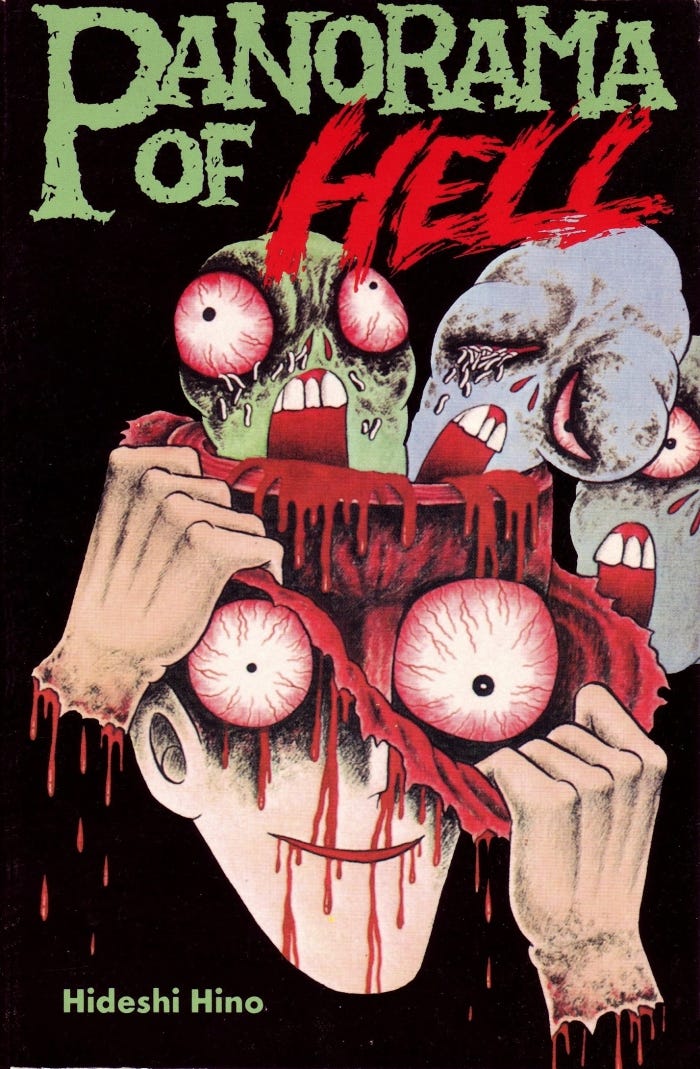
Other comics worth reading include Gallery of Horrors, Panorama of Hell, and Apocalypse Banquet, which features the blood-curdling titular tale that sees a gourmand driven to eat the fetus inside of his pregnant wife’s womb out of a lust for new culinary tastes. Hino’s specialty is graphic body horror in the short story form. In a word, he is a splatterpunk creator who seeks to make his readers as queasy as possible.
3. Suehiro Maruo (1956- )
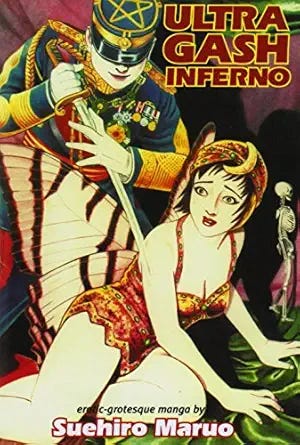
Of all the mangakas profiled here, Suehiro Maruo is the only one who has ever made me put down a book in absolute disgust. Why? Well, like Hino, Maruo is an artist who prefers material horrors (murder, rape, torture) to supernatural ones. However, unlike Hino, whose art is deliberately cartoonish and often blurs the line between horror and black comedy, Maruo draws stylish, lithe, and somewhat beautiful figures who do the most depraved acts imaginable.
Oh, and then there is the sex. Senior high school dropout Maruo, who began submitting stories to Weekly Shōnen Jump when he was just a seventeen-year-old kid in Tokyo, published his first professional work in BDSM magazines beginning in 1980. Maruo is the undisputed king of ero guro. His short stories and full-length graphic novels are chock full of explicit scenes that traffic in all manner of sexual perversities. Take 1989’s Poison Strawberry, for instance. Or, if you really want the gross stuff, 1982’s Rose Colored Monster features a castration in one panel, and in one short story, an underage girl is raped and tortured by a pair of teen Nazis. But the story that made me toss the book aside features a spoiled brat who treats his maid like a toilet—he pisses on her, shits on her, and much worse.
Basically, you need an iron stomach to appreciate Mauro’s work. He is not an artist who respects boundaries, and if you’re someone who needs “Trigger Warnings,” avoid his work altogether. That said, one of Maruo’s best works is the graphic novel adaptation of Edogawa Rampo’s The Strange Tale of Panorama Island. Rather than his usual mix of the revolting and salacious, this graphic novel leans more towards the surreal and sensual.
2. Junji Ito (1963 - )
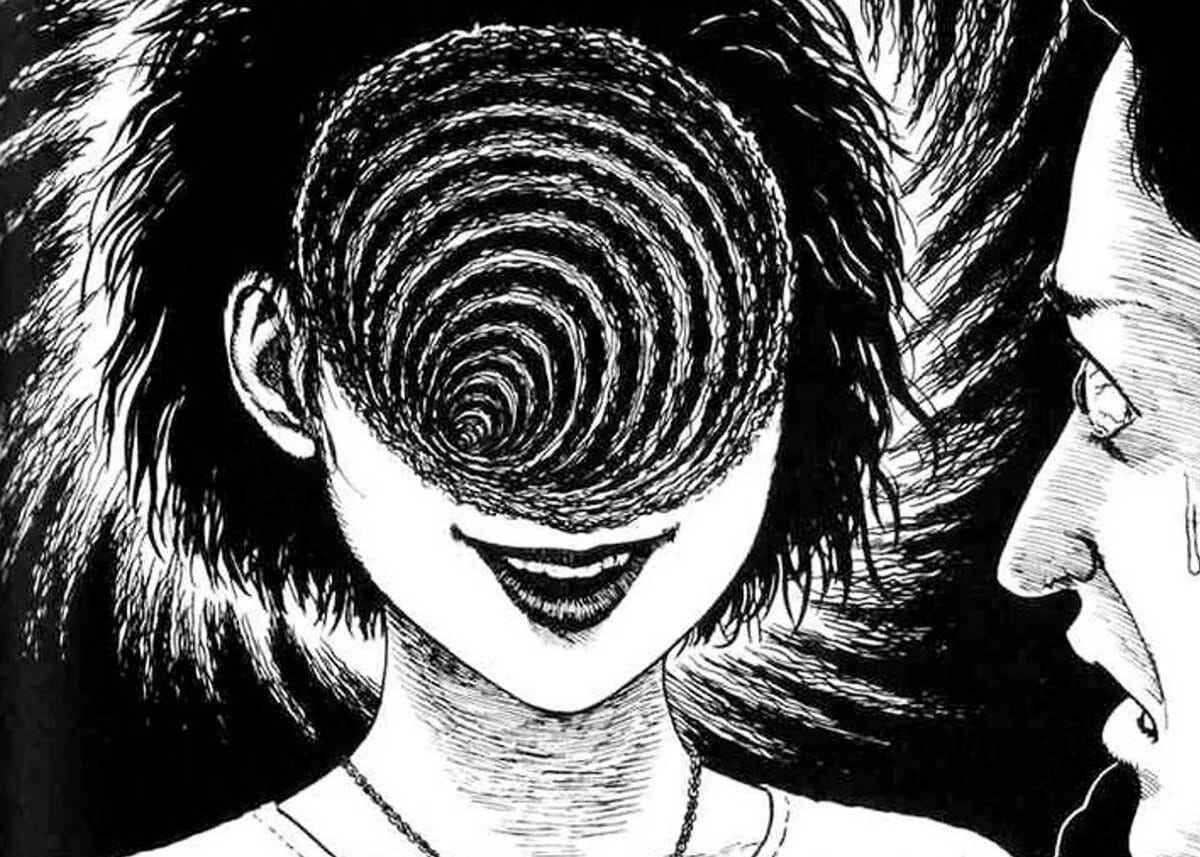
Junji Ito is without question the best-known horror mangaka in the English-speaking world. Translations of his short stories and graphic novels can easily be found at any Barnes & Noble. Similarly, Ito is the most critically acclaimed horror mangaka in the world. Born in Sakashita, Gifu Prefecture, Ito grew up wanting to be a manga artist, just like his idol, Kazuo Umezu, himself a horror specialist. Ito, who was working as a dental technician at the time, sold his first story to the magazine Monthly Halloween in 1987. The story, which Umezu himself judged, won an honorable mention and was later published as Tomie.
The 1990s and early 2000s saw Ito come into his own as arguably Japan’s greatest horror author. Uzumaki, which deals with a fog-shrouded town where spirals haunt everyone and everything, is quite possibly the best piece of cosmic horror written since Lovecraft’s death in 1937. It is a surreal, nauseating masterpiece of dread and horrific anarchy, where the inexplicable happens with regularity.
Other masterpieces include Gyo, which deals with a World War II-era science experiment that returns to haunt the residents of modern Japan, and the aforementioned Tomie. True to the horror genre in general, the vast majority of Ito’s work falls within the short story form. There are currently about twelve collections of Ito’s short stories available in English. The most recent collection, Statues, was published just two months ago.
In Ito’s oeuvre, high strangeness and body-horror frequently commingle. His work is not as graphic as Hino’s, and sex is almost never present. Instead, Ito specializes in eccentric tales that border on magical realism.
1. Gou Tanabe (1975 -)
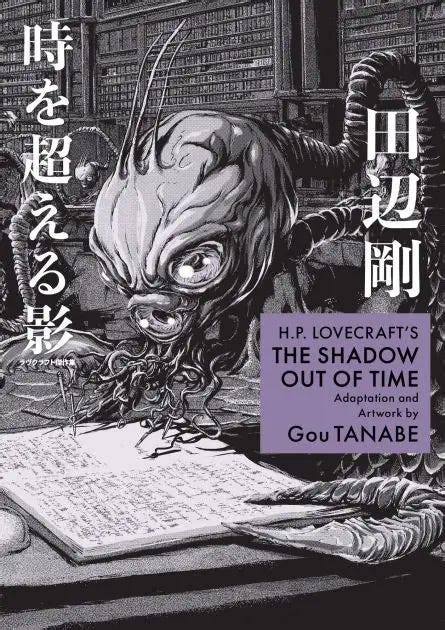
Around 2005, mangaka Tanabe was suffering through a creative drought. When he told his publisher this, they returned with a suggestion—read Lovecraft’s Cthulhu Mythos. This suggestion would have outsized ramifications, as Tanabe is today known as one of the great adaptors of Lovecraft’s work. Beginning with 2007’s The Outsider, Tanabe has adapted twelve of Lovecraft’s short stories and novellas. His most recent effort, The Shadow Out of Time, was published in English in late 2025.
Tanabe’s lush, Gothic style relies heavily on black and white to craft gorgeous yet disturbing scenes of cosmic dread. A more thorough exploration of Tanabe’s work, penned by yours truly, can be found here.
As can be seen, horror is well represented in manga. From the morbid to the moody, there is a horror manga for any sicko who likes to read about death in its myriad forms.