
Hard(er)-Boiled
A Review of Paul Cain's "Fast One"
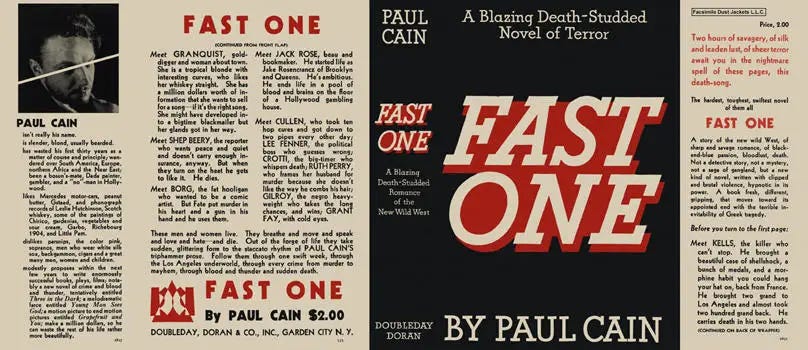
In this installment of CLASSICS FROM THE GRAVE, we will dissect the bloodiest and most amoral crime novel of the original pulp epoch—Paul Cain’s FAST ONE.
While we here at the Bizarchives tend to focus our creative energies on weird fiction, horror, sci-fi, and fantasy (all of which were either born in or bloomed in the pulps), the fact is that, during the halcyon days of the pulp epoch, crime and detective stories were ascendant. From true crime pulps to Black Mask, the latter of which bequeathed to the world the hard-boiled style of detective fiction, gumshoes and crooks were far more popular with readers than either Conan or Cthulhu. This popularity had staying power, too. Film noir, which truly came into its own after World War II, is a direct descendant of the hard-boiled pulps, with even some of the best-known noirs being adaptations of the stories and novels of Dashiell Hammett, Raymond Chandler, and James M. Cain.
Speaking of hard-boiled, and speaking of Hollywood, one Black Mask veteran named Peter Ruric made it out to Hollywood after first making it in the pulps. Under the pen name of “Paul Cain,” Ruric cranked out a handful of screenplays in the 1930s and 1940s, including 1942’s Grand Central Murder. However, despite finding significant success writing for the silver screen, Paul Cain’s greatest contribution to literature may be his 1933 novel, Fast One.
Without exaggeration, Fast One is the toughest, most violent hard-boiled novel ever to come screaming out of the 1930s. And while its narrative is a variation on a theme made familiar by Hammett (one shifty gunman playing two different gangster factions against each other), Cain’s novel added unprecedented buckets of blood and grimy language to craft a gruesome masterpiece.
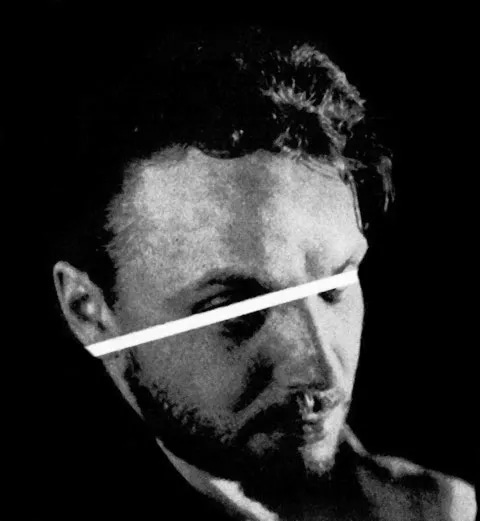
Paul Cain (1902-1966) was not born as Peter Ruric. Later in life, after moving to Hollywood, Cain made many outlandish claims, such as being a Russian adventurer-aristocrat on the run in America. Several Hollywood stars, like Myrna Loy, who worked with him, remembered him as being “that Russian screenwriter” [1]. Cain/Ruric was not Russian, but he was something of an adventurer. He was born George Caryl Sims in Des Moines, Iowa, on May 30, 1902. His father was a former police detective who turned in his badge to run a general store, while his mother was a second-generation immigrant whose parents were from Sweden. Cain’s parents divorced fairly early on in their son’s life, and yet they both moved to Los Angeles together in the early 1920s. By 1923, the elder Sims lived with his son and father at 1201 June Street.
When World War I rolled around, Cain volunteered for the United States Naval Reserve and lasted in uniform until 1921, when he got the boot for “ineptitude.” During this time, Cain bounced around a lot, with sojourns in Detroit and Chicago until he finally found himself in New York in the early 1930s. There he sat down behind his typewriter and started sending off two-fisted crime stories to magazines like Black Mask. Joseph T. Shaw, the Black Mask editor who cultivated writers like Carroll John Daly and Raymond Chandler, became a fan of Cain’s sparse prose and over-the-top violence. Shaw carved out a niche for Cain’s writing for a while, then Cain and his drunk actress girlfriend headed to Hollywood to screen-test for M-G-M. Cain wrote Fast One while staying at the Montecito Hotel & Apartments (6650 Franklin Avenue). He sold the novel’s idea to Paramount, who turned Cain’s story into the film Gambling Ship starring Cary Grant. One year later, Cain wrote the screenplay for the Expressionist horror masterpiece The Black Cat, starring Boris Karloff and Bela Lugosi.
All told, Cain’s contributions to pulp fiction do not amount to much — one novel and fourteen short stories before his death via cancer in 1966. Yet, despite his limited output, Cain has an oversized influence on hard-boiled crime fiction. Even Raymond Chandler (begrudgingly) admitted that Cain was a master of the style, with stories that move at lightning speed and dialogue that feels true to life.
Fast One begins with a proposition: New York gunman and World War I veteran Gerard “Gerry” Kells is approached by a hoodlum and bootlegger named Jack Rose (real name Jacob Rosencranz of Brooklyn). Rose is looking to take over the “wide open” city of Los Angeles, and he wants Kells to be his partner. Kells, who went out west to avoid several murder charges made by the New York police, does more than turn Rose’s offer down—he shoots up and sets fire to a gambling ship run by Rose and a local associate. Thus, the turf war begins in earnest.
This fiery act is but one of many moments of violence in Fast Once. Someone dies in almost every chapter, and frankly, it is hard to keep track of which corpse belongs to which gangland faction. The first victim is one of Rose’s gunmen, Haardt, who winds up shot to death in the apartment of Ruth Perry, a drunken gun moll. Kells engineers it so that Perry is picked up for the crime, but he is convinced that the gal can beat the rap. Next, Kells learns that Rose is involved in politics as well, and two Los Angeles politicos — the reformer Bellmann and his opponent Fenner — both vie for mob protection. Both want Kells, but the anti-hero turns everyone down. He has his own plans.
Eventually, after stopping a rigged heavyweight boxing bout, shooting gangsters and getting shot himself, Kells gets in deep with the seductive Dispo Granquist—a Swedish gal from Detroit who has some nasty photographs of Bellmann cavorting around with loose women and East Coast gangsters. The politicos want these photos, and a few wind up shot to death trying to steal them. Granquist seeks shelter with Kells, but this is a ploy. Kells learns to his chagrin on an island off the coast of Los Angeles that Granquist was sent to Los Angeles by an Italian plug-ugly named Crotti. Crotti is from the East, like Rose, and, like Rose, he wants to unite with Kells to take over L.A. Kells says, “Nothing doing,” and winds up getting beaten almost to death for his trouble. Kells eventually gets his revenge when he and another kill off Crotti and his men during an arrange sit-down over the kidnapped Granquist.
The climax of Fast One is reached when Kells, Granquist, and a hired thug named Borg crash one of Rose’s parties and gun down a slew of VIPs, including a crooked cop. A drunken Ruth Perry leaves Kells with a parting gift in the form of an icepick to the back of the neck. Kells survives for the moment, and even manages to shoot Perry in the guts, but this wound will ultimately do the gangster in. Cain’s novel ends with a car chase in downtown Los Angeles that sees both Granquist and Kells die in the mud after being shot and rammed by their adversaries.
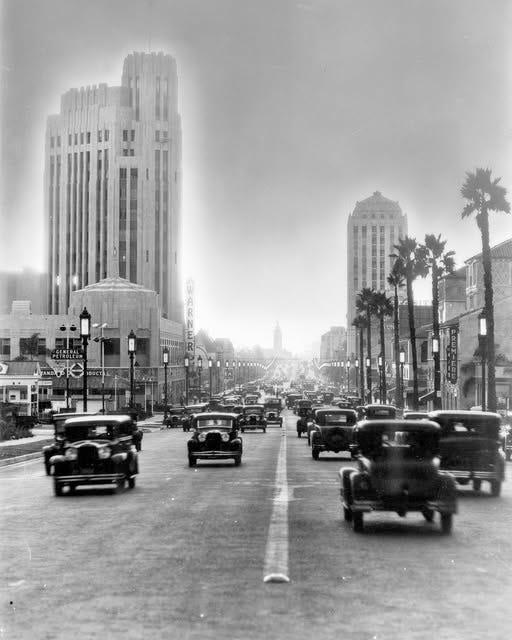
Fast One lives up to its title. This book moves at a furious pace. This element makes it somewhat frustrating to read, as it can be hard to keep everything in order. Like the works of Chandler and other hard-boiled scribes, the multi-layered plots in Fast One are impossible to keep track of. Everyone is double-crossing everyone else, and although Kells complains about being betrayed, he does a lot of treachery himself. Frankly, the plot of Fast One matters less than its ambiance and mood. The novel is a Dante-esque descent into the L.A. underworld during the last days of Prohibition, and for something published in 1933, it is shockingly blunt in its language (“god-damn” happens a lot, and at least one character calls someone a “slut”) and descriptions of crimes. Hell, the hoodlums in Fast One do more than move illegal hooch and political favors; they are also in the cocaine trade, which is another surprising aspect of this novel, given how relatively rare cocaine use was in the 1930s.
Fast One is the apotheosis of the ultraviolent style cultivated by Black Mask. And unlike Chandler or Hammett, who wrote from the perspective of grumpy, but still somewhat moral private eyes, Cain’s anti-hero has nothing good about him. Kells is a bloodthirsty man who, at some point, comes to believe that he alone should run L.A. This belief earns Kells buckshot to the leg, an icepick to the back, and a death in the mud, but still, what a ride! Cain’s only novel proves that sometimes you don’t need a coherent plot. All you need is lots of bullets and someone tough enough to kill after being almost killed multiple times over.
4.6 out of 5.
[1] Cain is said to have given Myrna Williams the stage name of “Loy” as a nod to British poet Mina Loy.